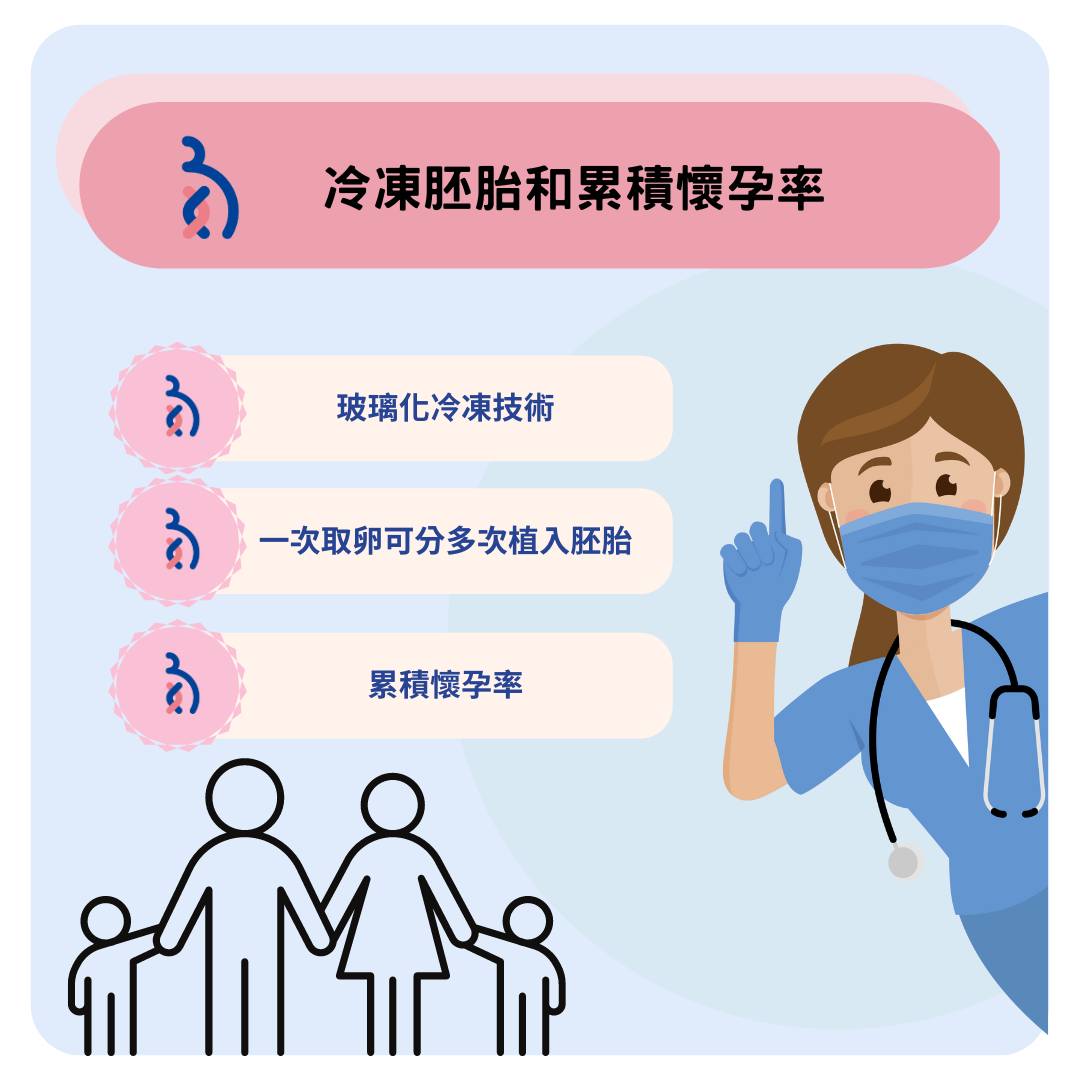
Frozen Embryos and Cumulative Pregnancy Rate
- 1.What are “frozen embryos”?
BRCIVF nursing consultant Ya-Lin Huang explains:
After sperm and eggs are fertilized, embryos are cultured for 3–5 days and then preserved using vitrification technology. They can later be thawed and transferred into the uterine cavity.
Frozen embryos can be stored for a long period of time. However, according to Taiwan’s current Assisted Reproduction Act, the storage period for embryos is 10 years.
- 1.Freezing technology
Water inside biological cells can form ice crystals during the freezing process, damaging the cells and making it difficult for them to survive the freezing and thawing process.
Today’s vitrification method uses cell dehydration and ultra-rapid cooling technology, which can effectively reduce the formation of ice crystals inside cells during freezing.
By rapidly cooling the embryos to -196°C for cryopreservation, this method helps improve the future survival rate of thawed embryos and eggs, as well as the pregnancy success rate after frozen embryo transfer.
- 1.Frozen embryo transfer
Transferring multiple embryos at one time can easily lead to multiple pregnancy and increase the risk of premature birth and low birth weight infants.
Since July 1, 2021, Taiwan’s Executive Yuan has implemented the Expanded Infertility Treatment, IVF, Subsidy Program to reduce the financial burden on infertile couples.
The program also encourages reducing the number of embryos transferred, in order to lower the burden that multiple pregnancies may place on families and the healthcare system.
BRCIVF wishes your dreams come true!