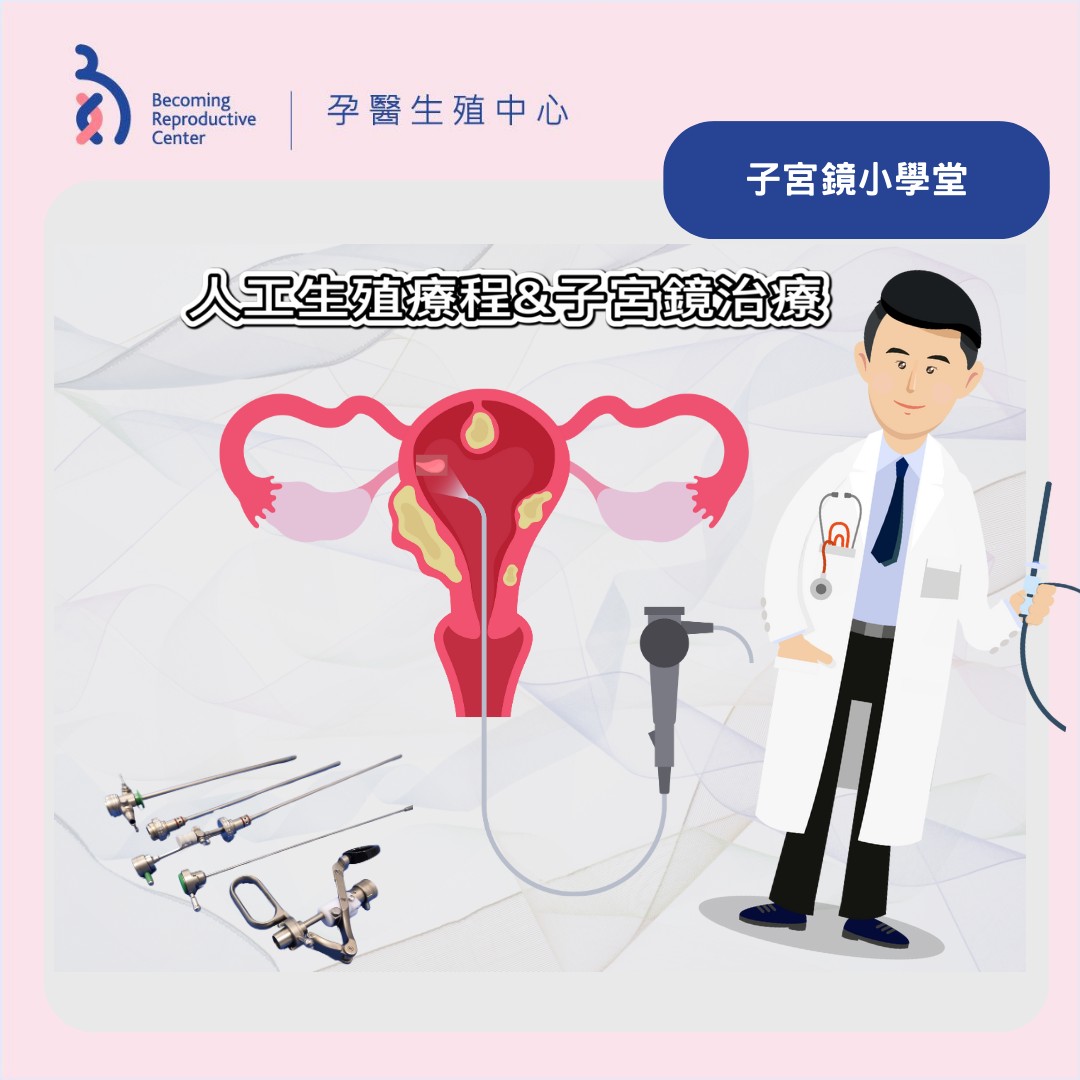
The Application of Hysteroscopy in Infertility
The success of infertility treatment is like finding a suitable living environment. It depends on three major factors:
- 1.The tenant
The quality of the embryo - 2.The landlord
The patient’s overall health condition, ovarian function, and other factors - 3.The room
The uterine structure, whether the fallopian tubes are open, and whether there are any endometrial lesions
According to the 2021 Assisted Reproduction Outcomes Report released by Taiwan’s Health Promotion Administration, about 9% of infertility patients in Taiwan have uterus-related issues.
In the past, methods used to evaluate uterine-related conditions included transvaginal ultrasound and hysterosalpingography, HSG.
Currently, hysteroscopy allows examination and treatment through a minimally invasive approach. It not only reduces the risk of infection, but also shortens recovery time.
It should be considered one of the most direct and accurate tools in the new generation for evaluating uterine cavity lesions.
- 1.Hysteroscopy, HSC
Hysteroscopy is a shortened term for uterine endoscopy.
An endoscopic camera is inserted through the vagina and cervix into the uterine cavity. The camera captures images of the inside of the uterine cavity, magnifies them 10–20 times, and transmits them to an external monitor for viewing.
- 1.Indications for hysteroscopy
- 2.Endometrial polyps
- 3.Submucosal uterine fibroids
- 4.Intrauterine adhesions
- 5.Uterine septum
- 6.Endometrial hyperplasia
- 7.Foreign objects inside the uterus, such as an intrauterine device
- 8.Unexplained abnormal uterine bleeding
- 9.Repeated implantation failure
- 10.Timing of the examination
After the third day of menstruation.
This helps avoid the possibility of an undetected pregnancy and prevents an overly thick endometrium from affecting the diagnosis of true lesions.
- 1.Is hysteroscopy painful?
Hysteroscopy usually does not require anesthesia.
The endoscope used is about 0.4–0.5 cm in diameter. In general, the procedure is not very painful.
Before the procedure, the doctor will provide pain medication to help relieve discomfort.
- 1.Risks of hysteroscopy
The complication rate of hysteroscopy is about 0.3%.
Compared with other surgeries and examinations, hysteroscopy is considered a relatively safe minimally invasive procedure.
- 1.Postoperative precautions after hysteroscopy
After hysteroscopy, there may be watery discharge, mild vaginal bleeding, and mild lower abdominal bloating or discomfort.
These symptoms usually recover on their own. Most patients can return to daily life after resting for one to two days.
Occasionally, there may be bleeding similar to menstruation after the examination, which usually resolves on its own within about one week.
- 1.Keep the area clean. Showering is recommended.
- 2.Avoid lifting heavy objects and intense exercise for one week.
- 3.If medication is prescribed by the doctor, take it as instructed.
Before preparing for IVF treatment, hysteroscopy is a step worth considering.
It not only helps evaluate and improve the intrauterine environment, but can also remove potential obstacles at the same time, increasing the chance of embryo implantation and improving the success rate of IVF treatment.
We recommend that women preparing for pregnancy consult their doctor to determine whether they meet the indications for hysteroscopy.
Based on your individual condition, a precise and personalized hysteroscopic examination and treatment plan can then be developed to help your wishes come true.
BRCIVF wishes your dreams come true!