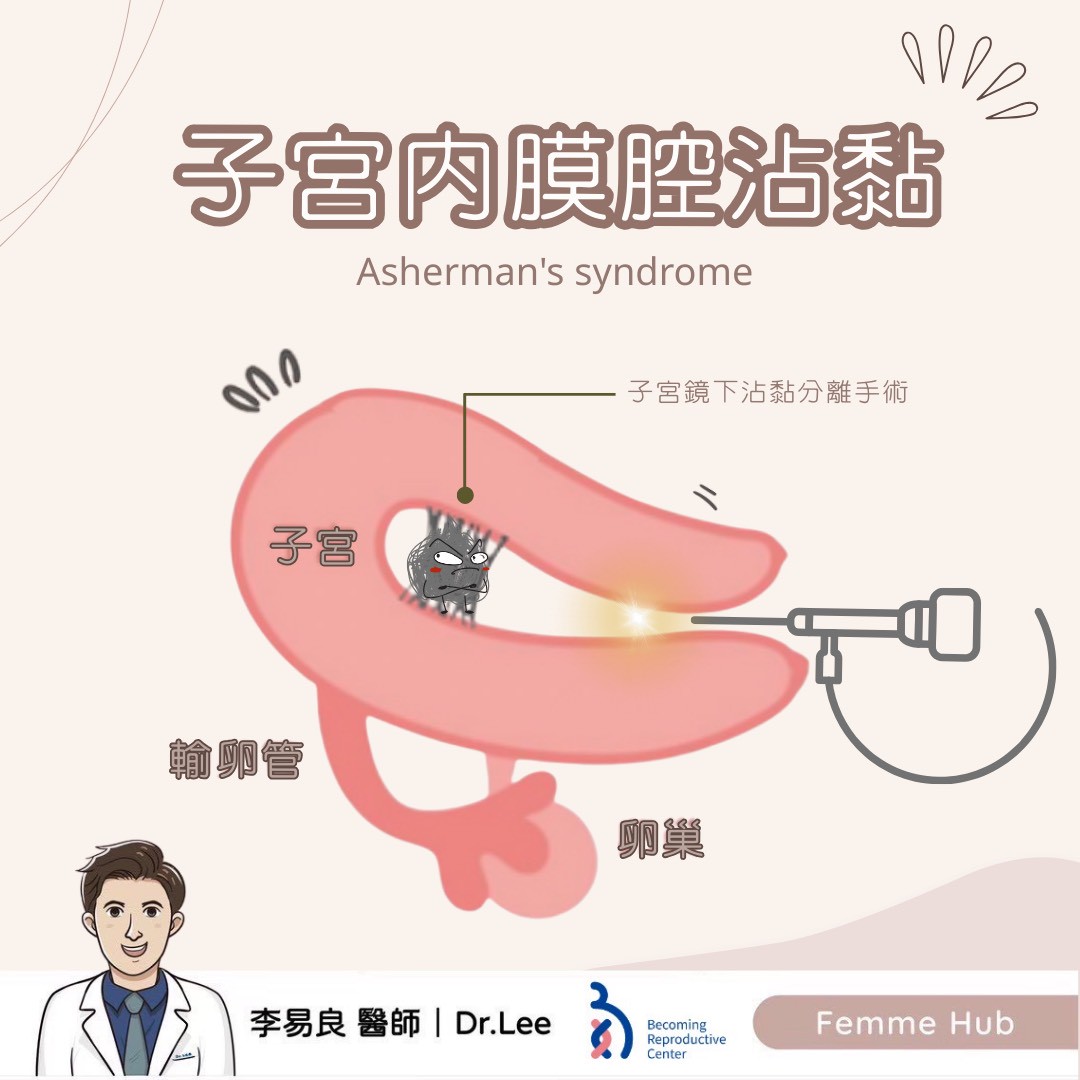
What Are Intrauterine Adhesions?
Shared by Dr. Yi-Liang Li
Many patients feel confused, and even a little scared, when they first hear the diagnosis of “intrauterine adhesions.”
In fact, this is a common issue in clinical obstetrics and gynecology.
Simply put, it means that the front, back, or side walls of the uterine cavity have become adhered due to certain causes. This can make the uterine cavity smaller, or even cause partial or complete blockage.
🔍 Why do intrauterine adhesions occur?
・Induced abortion or uterine curettage
・Excessive curettage may damage the basal layer of the endometrium.
・Infection inside the uterine cavity
・For example, postpartum infection or tuberculosis.
・Postoperative complications
・Such as after treatment for endometrial polyps, fibroids, or retained placental tissue.
・Radiation therapy or special uterine surgery
・These are less common causes.
・⚠️ What effects can it cause?
・Menstrual abnormalities
・Menstrual flow may become significantly lighter, or menstruation may even stop.
・Cyclic abdominal pain
Menstrual blood cannot flow out properly, leading to blood retention and pain.
・Infertility or recurrent miscarriage
The fertilized egg may not be able to implant, or embryo development may be affected by an unfavorable endometrial environment.
Clinically, many patients only discover the problem because their menstrual flow becomes less and less, or because embryos repeatedly fail to implant successfully.
In fact, intrauterine adhesions are not necessarily frightening. What is more concerning is not detecting them early.
Many patients often wonder:
“Is my lighter menstrual flow just normal aging, or does it mean something is wrong?”
“If IVF keeps failing, could the problem actually be with my uterine environment?”
These questions often require proper examination to clarify.
👉 In the next post, Dr. Li will share how intrauterine adhesions are diagnosed, the commonly used clinical treatments, and the key points of postoperative care, helping everyone face this condition with more peace of mind.
BRCIVF wishes your dreams come true!