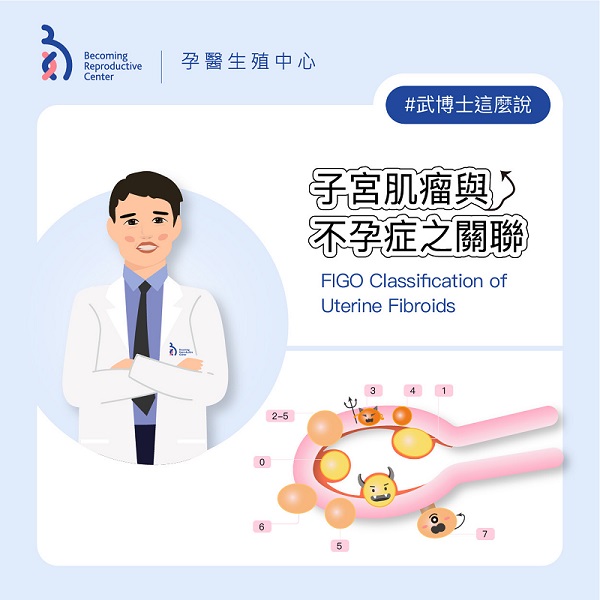
The Relationship Between Uterine Fibroids and Infertility
Dr. Wu explains:
Based on current clinical experience, 5%–10% of women with infertility have fibroid lesions.
Below is an overview of the 0–8 classification of fibroids according to their location:
📌 Submucosal fibroids, types 0–2:
These may have a negative impact on embryo implantation and pregnancy.
📌 Intramural fibroids, types 3–4:
The key factors are the size of the fibroid and whether it compresses the endometrium.
If there is an impact, medication or surgical removal should be considered.
📌 Subserosal fibroids, types 5–8:
These do not affect implantation or pregnancy.
FIGO, the International Federation of Gynecology and Obstetrics, classifies fibroids according to their location as follows:
0 = Pedunculated intracavitary fibroid
1 = Submucosal fibroid, < 50% within the uterine muscle layer
2 = Submucosal fibroid, ≥ 50% within the uterine muscle layer
3 = Intramural fibroid that touches the uterine mucosa
4 = Intramural fibroid that does not touch the uterine mucosa
5 = Subserosal fibroid, ≥ 50% within the uterine muscle layer
6 = Subserosal fibroid, < 50% within the uterine muscle layer
7 = Pedunculated subserosal fibroid
8 = Fibroids that cannot be classified under types 0–7, such as those located in the cervix or broad ligament
📅 Clinic hours for Dr. Kuo-Chang Wu: Every Monday afternoon, 13:30–17:00. Appointments and consultations are welcome.
BRCIVF wishes you good pregnancy luck!