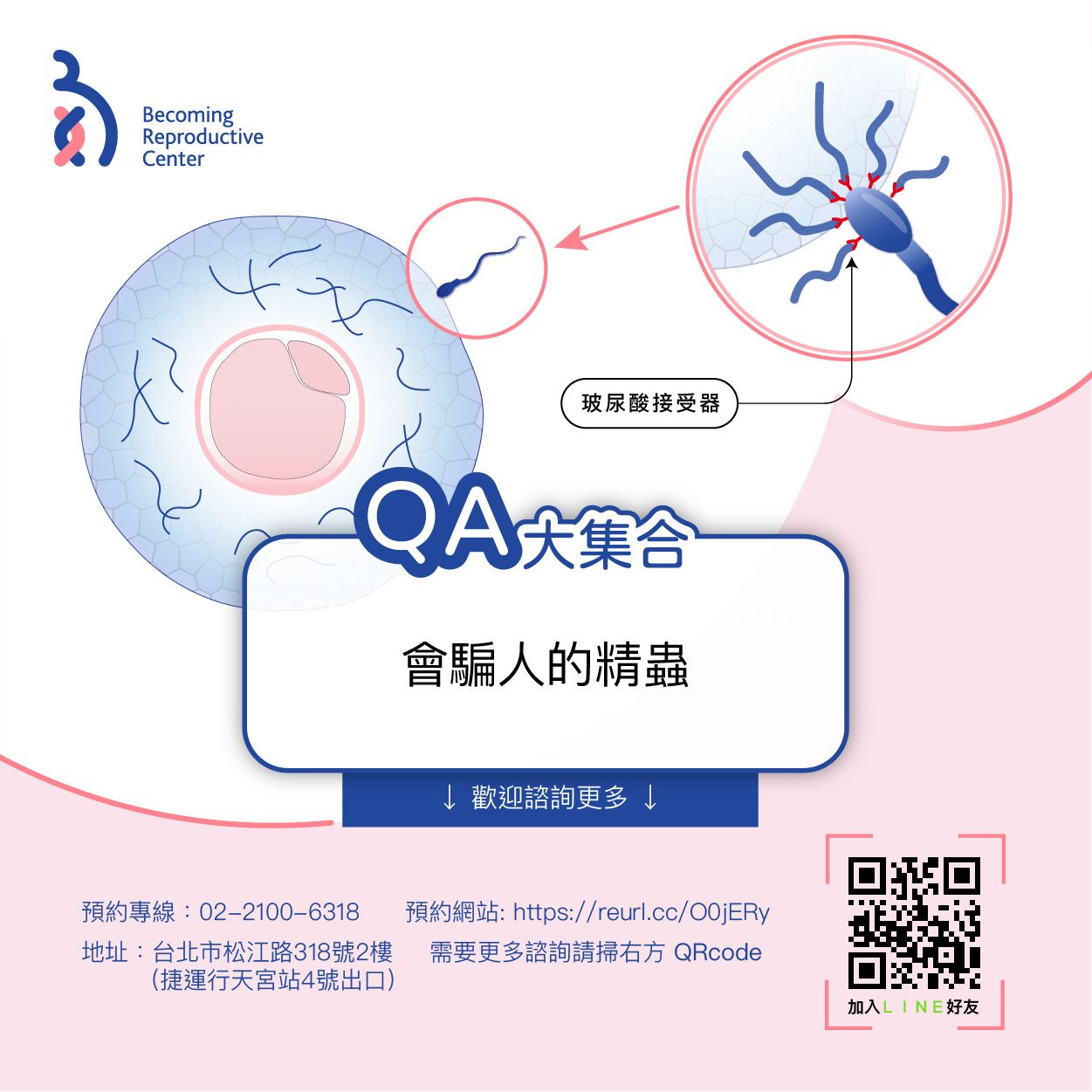
Deceptive Sperm
Traditional ICSI, intracytoplasmic sperm injection, involves the embryologist manually selecting good sperm based on appearance, morphology, and motility.
However, deceptive sperm can fool the embryologist’s judgment, or in other words, the eyes.
These sperm may appear good in terms of appearance, morphology, and motility, but they may still be immature and have a high level of DNA fragmentation.
This type of sperm is difficult to distinguish with the naked eye and lacks the hyaluronic acid receptor that mature sperm heads should have.
If deceptive sperm are unfortunately selected during an ICSI procedure, it may lead to less-than-ideal embryo development, lower embryo implantation rates, or an increased risk of early miscarriage.
To improve this situation, the medical field has developed a new technique: PICSI.
PICSI uses the sperm’s own physiological characteristics to select sperm that are confirmed to be mature for ICSI.
Mature sperm have hyaluronic acid receptors on their heads, allowing them to bind with hyaluronic acid.
PICSI technology uses a special culture dish coated with a dried layer of hyaluronic acid.
When washed sperm in the culture medium come into contact with the hyaluronic acid coating on the PICSI dish, the hyaluronic acid receptors on the heads of mature sperm bind to the hyaluronic acid on the dish.
Under the microscope, the embryologist can immediately observe sperm whose tails continue to move, while their heads appear stuck and firmly attached to the culture dish, unable to swim forward freely.
Selecting these sperm for microinjection helps ensure that the sperm injected into the egg is among the most mature and highest-quality sperm in the entire group.
If AMH is good, the number of eggs is sufficient, and the patient has undergone IVF more than once, but only very few embryos were successfully cultured, PICSI may be worth trying.
Perhaps the problem lies with deceptive sperm.
BRCIVF embryology technician: Ying-Jie Chen
BRCIVF wishes your dreams come true!